Last Update
Table of Contents
Dumpster rental Los Angeles costs vary based on the dumpster size, debris type, weight, rental period, and delivery location.
Most customers pay anywhere from $425 to $820, while smaller bins can cost less and larger construction dumpsters may cost more depending on the materials being disposed of.
Whether you’re cleaning out a garage, remodeling a bathroom, replacing roofing materials, or managing a construction project, understanding what affects pricing helps you choose the right bin and avoid unexpected charges.
For most projects, selecting the correct dumpster size and understanding weight allowances are the biggest factors in keeping your rental within budget.
If you’re ready to compare options, explore available dumpster rental Los Angeles services to find the right container for your project before booking.
Overview Of Los Angeles Dumpster Rentals
Dumpster rentals provide a convenient way to dispose of large amounts of waste without making multiple trips to a landfill.
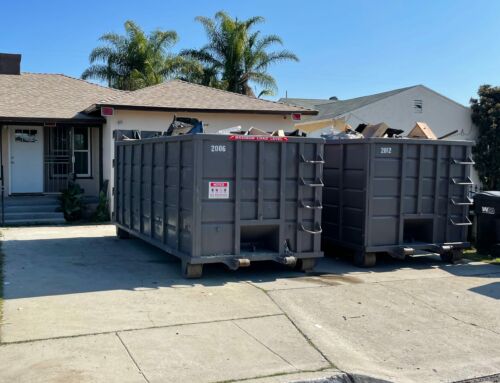
Roll-off dumpsters are commonly used for residential cleanouts, remodeling projects, landscaping, roofing jobs, demolition work, and commercial construction throughout the Los Angeles area.
Customers range from homeowners tackling spring cleaning to contractors managing multiple job sites.
Businesses also rent dumpsters for office renovations, retail cleanouts, and ongoing waste management.
Many Los Angeles dumpster rentals include:
- Delivery and pickup
- Standard rental period
- Disposal fees for approved materials
- Roll-off containers in multiple sizes
- Same-day delivery when available
- Insured delivery trucks
- Flexible scheduling
Because Los Angeles County includes dense neighborhoods, tight spaces, and varying local regulations, working with a local provider often makes scheduling and placement easier.
Why Choose Our Dumpster Rental In Los Angeles
Choosing a dumpster rental company isn’t just about finding the lowest price.
Transparent pricing, reliable service, and local experience can help prevent delays and surprise charges.
Benefits often include:
- Flat-rate pricing with no hidden fees
- Upfront pricing before booking
- Fast delivery across the Los Angeles area
- Same-day delivery when available
- Flexible rental periods
- Local knowledge of neighborhood access
- Compliance with local disposal requirements
- Reliable pickup scheduling
Local operators also understand access limitations throughout Los Angeles, from narrow residential streets to busy commercial districts, helping customers select a dumpster that fits the available space.
Dumpster Sizes And Recommendations
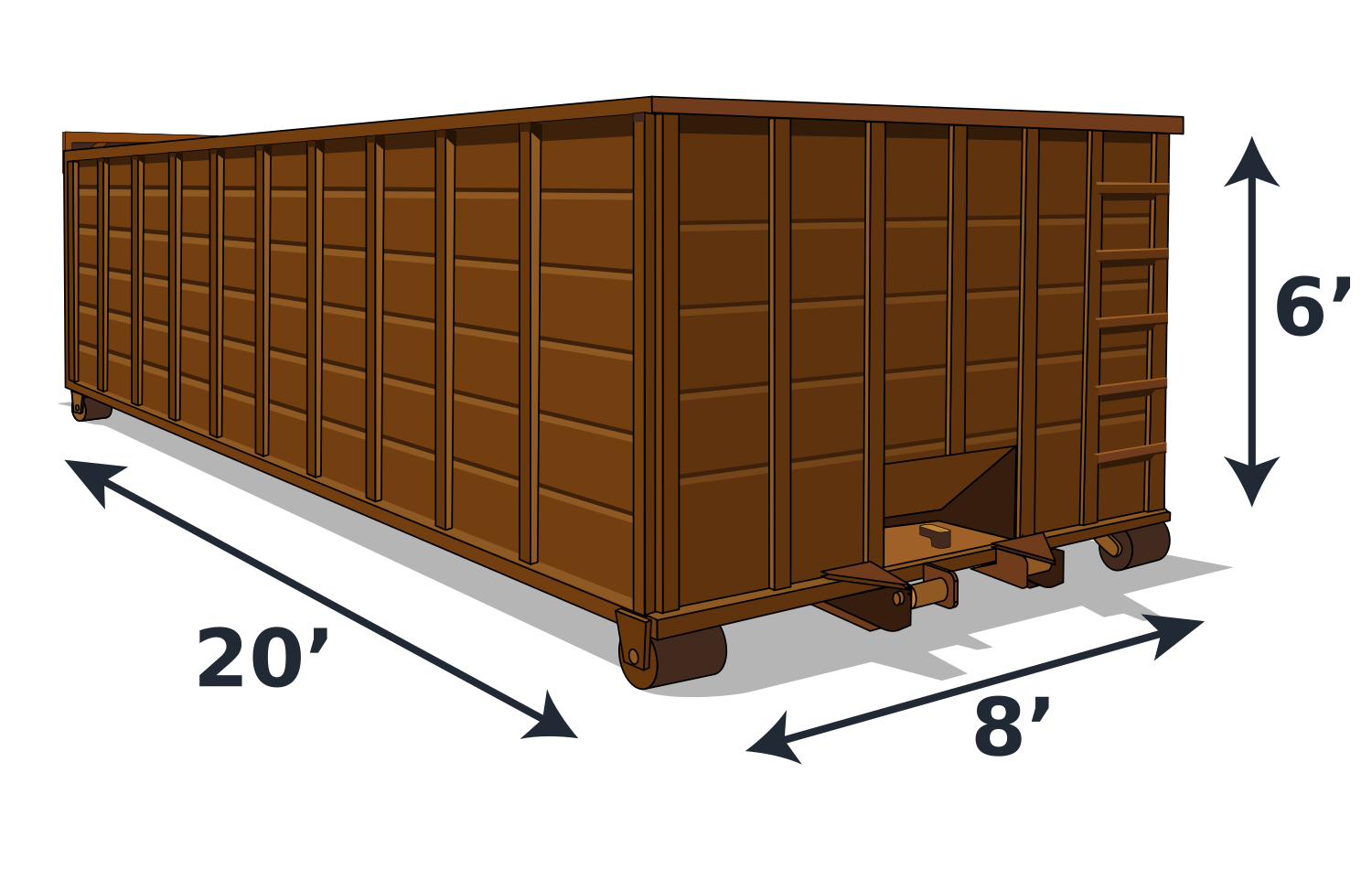
Dumpsters are measured in cubic yards, which indicates the amount of debris each container can hold.
Choosing the right dumpster size depends on both the volume and weight of the materials being disposed of.
Although larger dumpsters hold more debris, heavy materials like concrete, dirt, roofing materials, and brick can reach the weight limit long before the container appears full.
| Dumpster Size | Best For | Typical Weight Allowance |
|---|---|---|
| 3-yard dumpster | Small cleanouts, garage junk, yard waste | Varies by rental |
| 6-yard dumpster | Small home projects, furniture disposal | Varies by rental |
| 10-yard dumpster | Bathroom remodels, roofing, demolition | Typically 1–2 tons |
| 12-yard dumpster | Medium remodeling projects | Typically 2–3 tons |
| 15-yard dumpster | Kitchen renovations and larger cleanouts | Typically 2–3 tons |
| 20-yard dumpster | Whole-home cleanouts, remodeling | Typically 3–4 tons |
| 40-yard dumpster | Commercial construction and major projects | Typically 4–6 tons |
If you’re unsure which size dumpster is the better fit, it’s usually more economical to choose a slightly larger container than risk renting a second dumpster later.
Size Guide: When To Rent Each Dumpster Size
Choosing the right bin depends on the scope of your project and the type of debris you’ll dispose of.
3-Yard Dumpster
A 3-yard dumpster is ideal for:
- Small cleanouts
- Garage organization
- Yard waste
- Minor furniture disposal
- Tight driveways and limited space
These compact dumpsters are popular for homeowners who don’t need a large roll-off container.
10-Yard Dumpster
A 10-yard dumpster works well for:
- Bathroom remodeling
- Small demolition work
- Roofing materials
- Concrete removal (within weight limits)
- Light construction debris
This size offers a good balance between capacity and affordability.
20-Yard Dumpster
The 20-yard dumpster remains one of the most popular choices because it handles:
- Whole-home cleanouts
- Flooring replacement
- Kitchen remodels
- Large landscaping projects
- Residential construction debris
Many homeowners find this size provides enough room without taking up excessive driveway space.
40-Yard Dumpster
Large commercial projects often require a 40-yard dumpster.
This size is recommended for:
- Major renovations
- Commercial construction
- Large demolition projects
- Multi-unit property cleanouts
- Extensive roofing replacement
- High-volume construction debris
Because these dumpsters require additional clearance, it’s important to verify that enough space exists before delivery.
Budget Dumpster Options And Cost Factors
Dumpster rental prices depend on several variables rather than a single flat rate.
The biggest pricing factors include:
- Dumpster size
- Rental period
- Weight limit
- Debris type
- Delivery location
- Disposal fees
- Landfill charges
- Permit requirements
- Overage fees
Nationally, dumpster rental costs typically range from $425 to $820, although small 3-yard dumpsters may cost between $200 and $400, while larger containers can cost substantially more depending on debris weight and rental duration.
Heavy debris such as concrete, dirt, brick, and roofing materials often increases disposal costs because these materials quickly exceed weight allowances.
To help reduce overall costs:
- Choose the right size dumpster for your project.
- Avoid mixing heavy debris with household junk whenever possible.
- Load materials evenly to distribute weight.
- Do not overfill above the top edge of the container.
- Separate recyclable materials when allowed.
- Schedule pickup promptly after the dumpster is full to avoid unnecessary rental extensions.
Understanding these cost factors before you rent helps minimize unexpected charges and keeps your project on budget.
Handling Heavy Debris, Construction Debris, And Major Projects
Heavy debris requires additional planning because dense materials can exceed a dumpster’s weight limit long before the container looks full.
Concrete, dirt, brick, asphalt, roofing materials, and other construction debris should be loaded carefully to avoid overage fees and transportation issues.
For large construction projects, contractors often benefit from scheduling multiple pickups or rotating dumpsters instead of overloading a single container.
Best practices for handling heavy debris include:
- Use designated heavy debris bins when available.
- Spread materials evenly across the dumpster.
- Avoid mixing heavy debris with general household waste unless permitted.
- Split exceptionally heavy loads across multiple dumpsters.
- Schedule deliveries and pickups around project timelines to keep the jobsite organized.
- Confirm acceptable materials before delivery to prevent delays.
Planning helps contractors and homeowners complete demolition work more efficiently while staying within weight allowances.
Clean Concrete, Dirt, And Heavy Material Rules
Not all heavy materials are handled the same way. Clean concrete is often accepted separately because it can be recycled into aggregate for future construction projects.
Clean concrete generally means:
- Concrete without wood, rebar, plastic, or trash mixed in.
- Sidewalk sections.
- Driveway concrete.
- Concrete slabs.
Dirt, rock, sand, gravel, and similar materials usually require advance notice because they significantly increase the overall weight of a dumpster.
Extra disposal fees may apply when:
- Heavy materials exceed the included weight allowance.
- Debris is contaminated with prohibited materials.
- Concrete contains excessive mixed waste.
- Loads cannot be safely transported.
Providing accurate information about your debris before booking helps ensure the correct dumpster is delivered and prevents unexpected charges.
How To Rent A Dumpster In Los Angeles
Renting a dumpster is a straightforward process when you know the details of your project.
The typical process includes:
- Request a free quote online or by phone.
- Provide the project address.
- Estimate the type of debris you’ll dispose of.
- Choose the appropriate dumpster size.
- Select your preferred delivery date.
- Receive delivery within the scheduled window, with same-day delivery available for many orders placed early enough.
- Fill the dumpster during the rental period.
- Schedule pickup when your project is complete.
Most rentals include delivery, pickup, and a standard rental period.
If your project takes longer than expected, rental extensions may be available for an additional fee.
Free Quote And Booking
Getting a dumpster rental estimate is quick when you have a few project details ready.
Helpful information includes:
- Project address
- Desired delivery date
- Dumpster size
- Type of debris
- Estimated amount of waste
- Whether placement will be on a driveway or a public street
Providing accurate details allows the rental company to recommend the right bin and provide transparent pricing before delivery.
For projects with changing timelines, it’s also helpful to ask about availability for same-day delivery and flexible pickup scheduling.
Placement, Permits, And Street Rules for a Dumpster In Los Angeles
Choosing the right placement location can help avoid delays and additional costs.
Whenever possible, placing a dumpster on private property, such as a driveway, is the simplest option because permits are generally not required.
If the dumpster must be placed on a public street, many cities within Los Angeles require a permit before delivery.
Permit fees commonly range from $75 to $150, although requirements vary by municipality.
Helpful placement tips include:
- Leave enough overhead clearance for delivery.
- Keep the area free of parked vehicles.
- Protect decorative driveways when appropriate.
- Ensure there is adequate space for the roll-off truck to safely deliver and remove the container.
- Confirm local permit requirements before scheduling delivery.
Checking permit requirements in advance helps prevent project delays and potential fines.
Where We Deliver A Dumpster In Los Angeles
Dumpster rental services are available throughout much of Los Angeles County, with delivery extending into many surrounding communities based on availability.
Service coverage commonly includes neighborhoods and nearby areas such as:
- Hollywood
- Westwood
- Santa Monica
- Venice
- Marina del Rey
- Downtown Los Angeles
- Beverly Hills
- Culver City
Delivery availability may also extend to adjacent cities throughout the greater Los Angeles area.
Because scheduling can vary by location and demand, it’s always best to check availability using your project address before booking.
Contractor And Homeowner Dumpster Rentals And Services
Dumpster rentals support projects of every size, from small residential cleanouts to ongoing commercial construction.
Residential Dumpster Rentals
Homeowners frequently rent dumpsters for:
- Garage cleanouts
- Home cleanouts
- Moving preparation
- Landscaping projects
- Furniture disposal
- Kitchen remodeling
- Bathroom renovations
- Roofing replacement
Short-term rentals provide a convenient solution for projects that generate more waste than regular curbside collection can handle.
Contractor Dumpster Rentals
Contractors often need dependable roll-off dumpsters for:
- Construction debris
- Demolition work
- Roofing projects
- Commercial renovations
- New construction
- Jobsite cleanup
For ongoing projects, long-term rentals with scheduled pickups and replacements help maintain a safer, more efficient worksite.
FAQs And Helpful Tips For Dumpster Rentals
What happens if I exceed the weight limit?
If your dumpster exceeds the included weight allowance, additional overage fees are typically charged based on the extra weight.
Choosing the right dumpster size and accurately estimating debris helps avoid these charges.
What items cannot go into a dumpster?
Many rental companies prohibit items such as:
- Hazardous chemicals
- Paint and solvents
- Motor oil
- Tires
- Batteries
- Propane tanks
- Asbestos
- Medical waste
- Certain electronics
Always confirm restricted materials before loading your dumpster.
How long can I keep a dumpster?
Most dumpster rentals include a standard rental period, often up to 7 days, with extensions available if additional time is needed.
Is same-day delivery available?
Many dumpster rental companies offer same-day delivery when orders are placed early enough and inventory is available.
How can I avoid extra charges?
To help keep costs down:
- Choose the correct dumpster size.
- Stay below the weight limit.
- Do not overfill above the top rail.
- Separate heavy debris when possible.
- Follow prohibited item guidelines.
- Schedule pickup promptly after your project is complete.
Contact And Get A Free Quote Today
Whether you’re tackling a garage cleanout, remodeling your home, replacing a roof, or managing a large construction project, selecting the right dumpster can make waste removal simpler and more cost-effective.
Request a free quote by providing your project address, estimated debris type, and the dumpster size you need.
If your timeline is tight, ask about same-day delivery and current availability in your area.
With the right planning, the right dumpster size, and transparent pricing, you can keep your project on schedule while avoiding unnecessary disposal costs and overage fees.